PDF Ebook Hot, Flat, and Crowded: Why We Need a Green Revolution--and How It Can Renew America, by Thomas L. Friedman
Get the connect to download this Hot, Flat, And Crowded: Why We Need A Green Revolution--and How It Can Renew America, By Thomas L. Friedman and begin downloading and install. You could desire the download soft file of guide Hot, Flat, And Crowded: Why We Need A Green Revolution--and How It Can Renew America, By Thomas L. Friedman by undertaking various other activities. Which's all done. Currently, your rely on read a book is not consistently taking as well as lugging guide Hot, Flat, And Crowded: Why We Need A Green Revolution--and How It Can Renew America, By Thomas L. Friedman almost everywhere you go. You could save the soft data in your gadget that will never ever be far away and also read it as you such as. It resembles reading story tale from your gizmo then. Currently, start to enjoy reading Hot, Flat, And Crowded: Why We Need A Green Revolution--and How It Can Renew America, By Thomas L. Friedman and also obtain your new life!
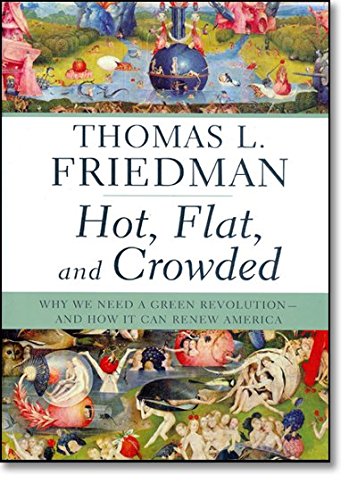
Hot, Flat, and Crowded: Why We Need a Green Revolution--and How It Can Renew America, by Thomas L. Friedman

PDF Ebook Hot, Flat, and Crowded: Why We Need a Green Revolution--and How It Can Renew America, by Thomas L. Friedman
Why should wait for some days to obtain or receive guide Hot, Flat, And Crowded: Why We Need A Green Revolution--and How It Can Renew America, By Thomas L. Friedman that you get? Why ought to you take it if you can get Hot, Flat, And Crowded: Why We Need A Green Revolution--and How It Can Renew America, By Thomas L. Friedman the faster one? You can discover the very same book that you buy here. This is it the book Hot, Flat, And Crowded: Why We Need A Green Revolution--and How It Can Renew America, By Thomas L. Friedman that you can get directly after purchasing. This Hot, Flat, And Crowded: Why We Need A Green Revolution--and How It Can Renew America, By Thomas L. Friedman is well known book around the world, obviously many people will certainly try to own it. Why don't you end up being the first? Still perplexed with the method?
If you really want really obtain the book Hot, Flat, And Crowded: Why We Need A Green Revolution--and How It Can Renew America, By Thomas L. Friedman to refer now, you should follow this web page always. Why? Remember that you need the Hot, Flat, And Crowded: Why We Need A Green Revolution--and How It Can Renew America, By Thomas L. Friedman source that will provide you ideal assumption, do not you? By visiting this internet site, you have actually started to make new deal to always be up-to-date. It is the first thing you can begin to get all gain from remaining in a web site with this Hot, Flat, And Crowded: Why We Need A Green Revolution--and How It Can Renew America, By Thomas L. Friedman and also other collections.
From now, locating the finished website that sells the finished publications will be numerous, yet we are the relied on website to see. Hot, Flat, And Crowded: Why We Need A Green Revolution--and How It Can Renew America, By Thomas L. Friedman with easy web link, very easy download, and finished book collections become our great solutions to obtain. You can locate and use the advantages of selecting this Hot, Flat, And Crowded: Why We Need A Green Revolution--and How It Can Renew America, By Thomas L. Friedman as every little thing you do. Life is constantly establishing and also you require some brand-new book Hot, Flat, And Crowded: Why We Need A Green Revolution--and How It Can Renew America, By Thomas L. Friedman to be referral constantly.
If you still need much more publications Hot, Flat, And Crowded: Why We Need A Green Revolution--and How It Can Renew America, By Thomas L. Friedman as references, visiting search the title and also style in this site is available. You will find even more great deals books Hot, Flat, And Crowded: Why We Need A Green Revolution--and How It Can Renew America, By Thomas L. Friedman in numerous self-controls. You could also as quickly as possible to review the book that is already downloaded and install. Open it as well as conserve Hot, Flat, And Crowded: Why We Need A Green Revolution--and How It Can Renew America, By Thomas L. Friedman in your disk or gadget. It will certainly reduce you any place you require guide soft data to check out. This Hot, Flat, And Crowded: Why We Need A Green Revolution--and How It Can Renew America, By Thomas L. Friedman soft documents to read can be referral for everybody to boost the ability and capacity.
Thomas L. Friedman’s no. 1 bestseller The World Is Flat has helped millions of readers to see globalization in a new way. Now Friedman brings a fresh outlook to the crises of destabilizing climate change and rising competition for energy—both of which could poison our world if we do not act quickly and collectively. His argument speaks to all of us who are concerned about the state of America in the global future.
Friedman proposes that an ambitious national strategy— which he calls “Geo-Greenism”—is not only what we need to save the planet from overheating; it is what we need to make America healthier, richer, more innovative, more productive, and more secure. As in The World Is Flat, he explains a new era—the Energy-Climate era—through an illuminating account of recent events. He shows how 9/11, Hurricane Katrina, and the flattening of the world by the Internet (which brought 3 billion new consumers onto the world stage) have combined to bring climate and energy issues to Main Street. But they have not gone very far down Main Street; the much-touted “green revolution” has hardly begun. With all that in mind, Friedman sets out the clean-technology breakthroughs we, and the world, will need; he shows that the ET (Energy Technology) revolution will be both transformative and disruptive; and he explains why America must lead this revolution—with the first Green President and a Green New Deal, spurred by the Greenest Generation. Hot, Flat, and Crowded is classic Thomas L. Friedman—fearless, incisive, forward-looking, and rich in surprising common sense about the world we live in today.- Sales Rank: #170188 in Books
- Brand: Friedman, Thomas L.
- Published on: 2008-09-08
- Released on: 2008-09-08
- Original language: English
- Number of items: 1
- Dimensions: 228.60" h x 28.57" w x 6.00" l, 1.55 pounds
- Binding: Hardcover
- 448 pages
- ISBN13: 9780374166854
- Condition: USED - Good
- Notes: 100% Satisfaction Guarantee. Tracking provided on most orders. Buy with Confidence! Millions of books sold!
Amazon.com Review
Book Description
Thomas L. Friedman’s phenomenal number-one bestseller The World Is Flat has helped millions of readers to see the world in a new way. In his brilliant, essential new book, Friedman takes a fresh and provocative look at two of the biggest challenges we face today: America’s surprising loss of focus and national purpose since 9/11; and the global environmental crisis, which is affecting everything from food to fuel to forests. In this groundbreaking account of where we stand now, he shows us how the solutions to these two big problems are linked--how we can restore the world and revive America at the same time.
Friedman explains how global warming, rapidly growing populations, and the astonishing expansion of the world’s middle class through globalization have produced a planet that is “hot, flat, and crowded.” Already the earth is being affected in ways that threaten to make it dangerously unstable. In just a few years, it will be too late to fix things--unless the United States steps up now and takes the lead in a worldwide effort to replace our wasteful, inefficient energy practices with a strategy for clean energy, energy efficiency, and conservation that Friedman calls Code Green.
This is a great challenge, Friedman explains, but also a great opportunity, and one that America cannot afford to miss. Not only is American leadership the key to the healing of the earth; it is also our best strategy for the renewal of America.
In vivid, entertaining chapters, Friedman makes it clear that the green revolution we need is like no revolution the world has seen. It will be the biggest innovation project in American history; it will be hard, not easy; and it will change everything from what you put into your car to what you see on your electric bill. But the payoff for America will be more than just cleaner air. It will inspire Americans to something we haven’t seen in a long time--nation-building in America--by summoning the intelligence, creativity, boldness, and concern for the common good that are our nation’s greatest natural resources.
Hot, Flat, and Crowded is classic Thomas L. Friedman: fearless, incisive, forward-looking, and rich in surprising common sense about the challenge--and the promise--of the future.
Thomas Friedman and Fareed Zakaria: Author One-to-One
Fareed Zakaria: Your book is about two things, the climate crisis and also about an American crisis. Why do you link the two?
Thomas Friedman: You're absolutely right--it is about two things. The book says, America has a problem and the world has a problem. The world's problem is that it's getting hot, flat and crowded and that convergence--that perfect storm--is driving a lot of negative trends. America's problem is that we've lost our way--we've lost our groove as a country. And the basic argument of the book is that we can solve our problem by taking the lead in solving the world's problem.
Zakaria: Explain what you mean by "hot, flat and crowded."
Friedman: There is a convergence of basically three large forces: one is global warming, which has been going on at a very slow pace since the industrial revolution; the second--what I call the flattening of the world--is a metaphor for the rise of middle-class citizens, from China to India to Brazil to Russia to Eastern Europe, who are beginning to consume like Americans. That's a blessing in so many ways--it's a blessing for global stability and for global growth. But it has enormous resource complications, if all these people--whom you've written about in your book, The Post American World--begin to consume like Americans. And lastly, global population growth simply refers to the steady growth of population in general, but at the same time the growth of more and more people able to live this middle-class lifestyle. Between now and 2020, the world's going to add another billion people. And their resource demands--at every level--are going to be enormous. I tell the story in the book how, if we give each one of the next billion people on the planet just one sixty-watt incandescent light bulb, what it will mean: the answer is that it will require about 20 new 500-megawatt coal-burning power plants. That's so they can each turn on just one light bulb!
Zakaria: In my book I talk about the "rise of the rest" and about the reality of how this rise of new powerful economic nations is completely changing the way the world works. Most everyone's efforts have been devoted to Kyoto-like solutions, with the idea of getting western countries to reduce their carbon dioxide emissions. But I grew to realize that the West was a sideshow. India and China will build hundreds of coal-fire power plants in the next ten years and the combined carbon dioxide emissions of those new plants alone are five times larger than the savings mandated by the Kyoto accords. What do you do with the Indias and Chinas of the world?
Friedman: I think there are two approaches. There has to be more understanding of the basic unfairness they feel. They feel like we sat down, had the hors d'oeuvres, ate the entrée, pretty much finished off the dessert, invited them for tea and coffee and then said, "Let's split the bill." So I understand the big sense of unfairness--they feel that now that they have a chance to grow and reach with large numbers a whole new standard of living, we're basically telling them, "Your growth, and all the emissions it would add, is threatening the world's climate." At the same time, what I say to them--what I said to young Chinese most recently when I was just in China is this: Every time I come to China, young Chinese say to me, "Mr. Friedman, your country grew dirty for 150 years. Now it's our turn." And I say to them, "Yes, you're absolutely right, it's your turn. Grow as dirty as you want. Take your time. Because I think we probably just need about five years to invent all the new clean power technologies you're going to need as you choke to death, and we're going to come and sell them to you. And we're going to clean your clock in the next great global industry. So please, take your time. If you want to give us a five-year lead in the next great global industry, I will take five. If you want to give us ten, that would be even better. In other words, I know this is unfair, but I am here to tell you that in a world that's hot, flat and crowded, ET--energy technology--is going to be as big an industry as IT--information technology. Maybe even bigger. And who claims that industry--whose country and whose companies dominate that industry--I think is going to enjoy more national security, more economic security, more economic growth, a healthier population, and greater global respect, for that matter, as well. So you can sit back and say, it's not fair that we have to compete in this new industry, that we should get to grow dirty for a while, or you can do what you did in telecommunications, and that is try to leap-frog us. And that's really what I'm saying to them: this is a great economic opportunity. The game is still open. I want my country to win it--I'm not sure it will.
Zakaria: I'm struck by the point you make about energy technology. In my book I'm pretty optimistic about the United States. But the one area where I'm worried is actually ET. We do fantastically in biotech, we're doing fantastically in nanotechnology. But none of these new technologies have the kind of system-wide effect that information technology did. Energy does. If you want to find the next technological revolution you need to find an industry that transforms everything you do. Biotechnology affects one critical aspect of your day-to-day life, health, but not all of it. But energy--the consumption of energy--affects every human activity in the modern world. Now, my fear is that, of all the industries in the future, that's the one where we're not ahead of the pack. Are we going to run second in this race?
Friedman: Well, I want to ask you that, Fareed. Why do you think we haven't led this industry, which itself has huge technological implications? We have all the secret sauce, all the technological prowess, to lead this industry. Why do you think this is the one area--and it's enormous, it's actually going to dwarf all the others--where we haven't been at the real cutting edge?
From Publishers Weekly
Pulitzer Prize-winning New York Times columnist Friedman (The World Is Flat) is still an unrepentant guru of globalism, despite the looming economic crisis attributable, in Friendman's view, to the U.S. having become a "subprime nation that thinks it can just borrow its way to prosperity." Friedman covers familiar territory (the need for alternate energy, conservation measures, recycling, energy efficiency, etc.) as a build-up to his main thesis: the U.S. market is the "most effective and prolific system for transformational innovation.... There is only one thing bigger than Mother Nature and that is Father Profit." While he remains ostensibly a proponent of the free market, he does not flinch from using the government to create conditions favorable to investment, such as setting a "floor price for crude oil or gasoline," and imposing a new gasoline tax ($5-$10 per gallon) in order to make investment in green technologies attractive to venture capitalists: "America needs an energy technology bubble just like the information technology bubble." To make such draconian measures palatable, Friedman poses a national competition to "outgreen" China, modeled on Kennedy's proposal to beat the Soviets to the moon, a race that required a country-wide mobilization comparable to the WWII war effort. Recognizing the looming threat of "petrodicatorship" and U.S. dependence on imported oil, this warning salvo presents a stirring and far-darker vision than Friedman's earlier books.
Copyright © Reed Business Information, a division of Reed Elsevier Inc. All rights reserved.
From Bookmarks Magazine
It’s hard not to admire Thomas Friedman’s reporting, even if it sometimes feels like a sales pitch. That’s why those who agree with Friedman’s analysis were excited about this book: it may not be the best volume available on the subject, but it will encourage millions of people to think about the central role climate change should play in the national discourse. But Bjøorn Lomborg, author of Cool It: The Skeptical Environmentalist’s Guide to Global Warming, wrote that Friedman exaggerates the impact of global warming, uses random research to support his argument, and completely fails to take economics into account when he proposes solutions. Eric Fisher, on the other hand, was so annoyed with Friedman’s drastic tone and predilection for coining sociological “laws” that his review skirted Friedman’s argument and mocked its form, which may represent the reaction of some of those seeking a more sophisticated take on this timely subject.
Copyright 2008 Bookmarks Publishing LLC
Most helpful customer reviews
3 of 3 people found the following review helpful.
This book should be required reading for every politician
By John Larrison
Friedman's work is always provocative with a cautionary tone followed by an optimistic outlook. Although this as well as his previous books are somewhat dated (this one doesn't take into account the recent natural gas boom created by fracking), the general message remains as true and pertinent today as when it was written (since our politicians don't have the courage to overcome the lobbyists of the wealthy and enact these long term policies). The book really could be about 2/3 the length as Friedman does have a tendency to continue to hammer well established concepts over and over to emphasize his points but you can see this coming and skip ahead fairly easy. If you don't want to commit to the whole book you should at least read the story about First Solar in the latter part of the book. That says a lot about the power of the elite pulling us in the wrong direction.
0 of 0 people found the following review helpful.
The state of the world from a pragmatic perspective
By Amod A. Vaze
Tom Friedman always has a practical point of view on things and this book is no exception. I found this book to be more forward-looking compared to The World Is Flat, which is more journalistic in its reporting of events that led to the world's economic state today. This book is more about steps the United States can take to ensure American dominance in the 21st Century.
I highly recommend this book to anyone that just thinks of environmental rights advocates as "treehuggers". Tom Friedman goes into extensive detail about how a green movement can have economic and national security benefits as well, such as reducing poverty and increasing productivity in regions of poor countries that do not have a stable electric grid and bankrupting petrodictators, who benefit from and are able to remain in power due to oil revenues.
0 of 0 people found the following review helpful.
Good, but redundant
By Richard Weston
Excellent book--though if you read a lot of Friedman, there's nothing to justify a new title. He has said the same thing over and over. Of course he's right--but redundant.
Hot, Flat, and Crowded: Why We Need a Green Revolution--and How It Can Renew America, by Thomas L. Friedman PDF
Hot, Flat, and Crowded: Why We Need a Green Revolution--and How It Can Renew America, by Thomas L. Friedman EPub
Hot, Flat, and Crowded: Why We Need a Green Revolution--and How It Can Renew America, by Thomas L. Friedman Doc
Hot, Flat, and Crowded: Why We Need a Green Revolution--and How It Can Renew America, by Thomas L. Friedman iBooks
Hot, Flat, and Crowded: Why We Need a Green Revolution--and How It Can Renew America, by Thomas L. Friedman rtf
Hot, Flat, and Crowded: Why We Need a Green Revolution--and How It Can Renew America, by Thomas L. Friedman Mobipocket
Hot, Flat, and Crowded: Why We Need a Green Revolution--and How It Can Renew America, by Thomas L. Friedman Kindle

Tidak ada komentar:
Posting Komentar